


Garrison Lovely, Freelance Journalist — October 1, 2026

The noisy discourse surrounding artificial intelligence is hard to parse. Where else can you find Elon Musk siding with the Service Employees International Union against Nancy Pelosi and far-right billionaire Marc Andreessen? Or Steve Bannon agreeing with Barack Obama’s national security advisor, Susan Rice, while openly criticizing Donald Trump’s policies? Last month, the AI extinction debate went mainstream after resigning Anthropic researcher Jacob Coxon’s explosive warning that “The people building AI earnestly believe that it could kill us all by the end of the decade.” In response, industry leaders called for a collective slowdown in development.
It is not the first time they have suggested that progress should be paced, but the barrier (or excuse) is that they cannot slow down if others don’t. Why is the race so fierce? Because they think whoever first automates AI research and development itself could convert a temporary lead into a permanent one. Their ultimate goal—what they call artificial general intelligence (AGI), but what I call the Obsoleting Machine—promises an unprecedented advantage to its creator: work without workers.
Both companies and countries have always been constrained because humans are the constraint. It takes a long time to make more of us, to educate us, to feed and shelter us. We can only do so much. For centuries, automation has allowed owners to substitute some capital for labor—the tractor for the farmhand, the power loom for the weaver—but only to a point.
Now, AI promises to cut out that last constraint—us—by building a new type of machine, one that doesn’t make products or services, but makes labor itself. This obliterates the one fundamental limit and opens up new worlds of possibility. Some of those worlds offer tantalizing riches to the winners of the race—unimaginable profits, geopolitical dominance—but, for the rest of us, obsolescence in the best case and, in the worst, annihilation or something darker.
Aware of the dangers, but unwilling to step back and let competitors reap the purported rewards of winning, the leaders of the Obsoleting Project say they’re trapped in a race they keep accelerating. As Elon Musk said in 2025, “If I could, I would certainly slow down AI and robotics. I’ve had a lot of AI nightmares, many days in a row,” shrugging as he asked—unbelievably—“what am I supposed to do about it?”
OK. Let’s make it easy for them. We can stop the Obsoleting Project. Here’s how.
What follows is an exclusive excerpt of “Obsolete: The AI Industry’s Trillion-Dollar Race to Replace Us—and How to Stop It,” by Garrison Lovely. The chapter has been trimmed for length.
Chapter 16: Stopping the Obsoleting Project
Regulating Math
AI boosters often say things like, “You can’t regulate math”—at least, not without an intrusive global surveillance regime. If AI is just algorithms and model weights, the reasoning goes, any restriction will be futile.
This badly misunderstands how frontier AI actually works. These aren’t garage startups. The standalone US frontier AI companies—OpenAI, Anthropic, and xAI—have each received tens of billions in funding and are valuable enough to make each one of the world’s top-80 publicly traded firms by market cap. Even DeepSeek, the Chinese startup that shocked the world with its highly efficient and capable R1 model in January 2025, spent an estimated $1.6 billion on server hardware.
All of this makes it a lot easier for governments to halt a large training run, if they choose to. Because of how much computing power frontier models require, many researchers see chips as an effective means of monitoring and potentially controlling who is training the world’s largest AI systems, an approach known as “compute governance.” The extreme concentration in industries building advanced AI chips means that three distinct companies—ASML, Taiwan Semiconductor Manufacturing Company (TSMC), and Nvidia—each individually control an essential layer of the supply chain. TSMC fabricates nearly all advanced AI chips, and ASML is a Dutch company that makes 100 percent of the advanced lithography machines needed to manufacture cutting-edge AI chips. Stopping the Obsoleting Project wouldn’t require a global government or spyware on every laptop, just restrictions on a tiny handful of companies.
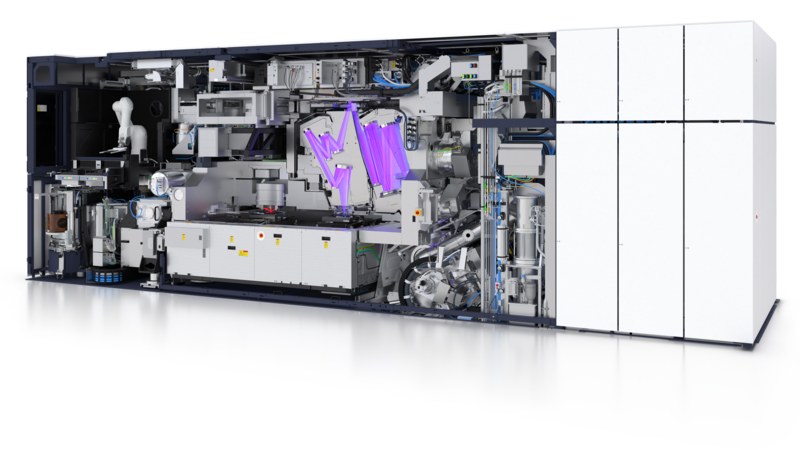
The US actually already has a number of legal authorities available to discipline or even stop the industry, detailed in a report from the nonprofit Institute for Law & AI. In a crisis, the president could invoke existing national security or emergency powers to compel AI companies and compute providers to stop training or deploying a risky model. Agencies could use export controls to restrict access to the chips or cloud compute needed for cutting-edge AI or shape company policy directly using terms of federal contracts. Export controls could even be used to restrict the distribution of the model weights themselves.
The concentration in AI’s supply chain has already been used to effectively restrict access to compute. Citing national security concerns, the Biden administration instituted a series of surprisingly aggressive bans on the sale of advanced AI chips and key chip manufacturing equipment to China. Nvidia is an American company, so the executive branch could unilaterally institute export controls on chip sales. The US also had so much leverage over the rest of the supply chain that it was able to get the Netherlands and Japan to impose their own export controls on chip manufacturing equipment. And since the best chips TSMC makes are designed by Nvidia, the US was able to directly restrict the Taiwanese chipmaker, as well.
All of these tools have limits: most were not designed for AI and would likely face legal challenges and fierce industry pressure. Some, like export controls, struggle with open-source releases; others, like federal funding, don’t touch unfunded actors. There are also “reasonable concerns about stretching powers to their breaking point,” said report coauthor Mackenzie Arnold. “It undermines political legitimacy, slows down decisionmaking, and encourages executive overreach. Other times, uncertainty will lead to costly inaction.” Whether the US could actually hit stop is “both a question of law and political realism.” New legislation could resolve that ambiguity, but the main missing ingredient is the political will to actually pull the brakes.
Why Compute Governance Is Failing
Any kind of significant new compute restrictions can’t happen without overcoming the interests of many of the wealthiest organizations and people on the planet. No company has fought harder against compute restrictions than Nvidia. CEO Jensen Huang has argued that the policies are a “failure” because they gave Chinese tech firms “the spirit, the energy, and the government support to accelerate their development.” China, he’s said, is just “nanoseconds behind” the US in chipmaking. But Huang’s also pronounced that Nvidia’s GPUs are “so good that even when the competitor’s chips are free, it’s not cheap enough.” He’s claimed there’s no evidence of chip smuggling. However, the head of the agency responsible for enforcing the controls told Congress that “it’s happening. It’s just a fact”—a phenomenon independently corroborated by at least six different news outlets. Huang has also said the US doesn’t have to worry about China’s military using American tech because “they simply can’t rely on it.” But an analysis of 66,000 People’s Liberation Army purchase orders found that nearly all their AI chips came from Nvidia or other American companies.
Clearly, Huang will say whatever it takes to kill export controls. And, behind closed doors, Nvidia appears willing to do whatever it takes. When a Republican congressional proposal sought to codify export controls, The New York Times reported the company used “an unconventional lobbying blitz” to smear the bill as “a product of left-wing paranoia peddled by people it calls AI doomers.” And there are multiple reports of the chipmaker trying to get opponents fired from think tank and government roles over their work on restrictions. Samuel Hammond, chief economist at a conservative think tank, was one of the few to speak about this publicly: “I often criticize Nvidia for putting sales to China ahead of US national security. At least twice this year, they’ve reached out to complain or worse.”
Nvidia’s approach, hamfisted and dishonest as it is, is working. One DC think tanker I spoke with attributed the Trump administration’s decisions to approve chip sales to autocracies to “pure corruption”—companies “like Nvidia who are just throwing tons of money around, just like, steamrolling opponents, operating in a lot of bad faith.” Exasperated, they said, “Nvidia is clearly just running rampant.”
A different think tank researcher told me they were nervous that White House AI Czar David Sacks and Nvidia had teamed up to specifically hunt down “so-called sci-fi doomers.” They also said that the Trump administration seems “totally fine to run export controls into the ground,” adding that, somewhat paradoxically, “the Republicans are much less bought into Nvidia, and a decent amount of Republican senators actually hate Nvidia pretty constantly. But weirdly enough, it’s the Dems that are scared of Nvidia.” Democratic fear has had real consequences, they said. Without it, their “sense is that we would have like one, if not two, pieces of major export control legislation, heading to the president’s desk.”
Of all of those I spoke to about Nvidia, only one person was willing to speak on the record. He also happened to be someone Nvidia couldn’t get fired. After serving as a Democratic congressman and an acting undersecretary of defense, Brad Carson cofounded Americans for Responsible Innovation (ARI), where he serves as president. “I’m sure Jensen is in Mike Johnson and Steve Scalise’s office as we speak telling him to cut this,” he said, already preparing for a hollow victory. ARI had just helped successfully lobby the Senate to include the GAIN AI Act in the must-pass 2026 defense authorization bill, requiring chip companies to sell to US-based customers before selling to China. Since Nvidia’s already over-subscribed, the provision would function much like export controls. Despite its America First flavor, GAIN—after opposition from both industry and Sacks—didn’t make it into the final bill.
Nvidia’s chilling effect also helps make sense of a puzzle: Export controls kneecap Chinese competitors and make scarce AI chips easier to get, so why aren’t American companies more supportive? Well, they largely exist at Nvidia’s mercy. There’s way more demand for its chips than supply, and, rather than raise prices, Nvidia decides who gets what. In a deep-dive on the company’s shenanigans, former OpenAI safety researcher Steven Adler writes, “The only prominent AI company I’m aware of opposing Nvidia’s position on sales restrictions is Anthropic.” Why? “From the sources I spoke with, the answer is straightforward: Anthropic is more insulated from Nvidia and so has less to lose from provoking their ire.”
Even companies that recently backed export controls—as OpenAI did in its March 2025 submission to the White House AI Action Plan—have reconsidered. Five months later, Altman told journalists, “My instinct is that it doesn’t work.” And just over a month after that, Nvidia announced it would invest up to $100 billion in OpenAI, prompting trepidation from former OpenAI policy chief Miles Brundage:
Hope Nvidia doesn’t get a board seat or any voting power via this massive investment.
Hard to think of many worse ways of distorting decision making, particularly as it relates to OpenAI’s policy advocacy.
These about-faces are not limited to the industry. Export controls on Chinese companies began in the first Trump term, when the administration, also citing national security concerns, banned chip sales to Huawei. But the second Trump administration has been systematically dismantling the infrastructure for chip restrictions: purging career officials and even withdrawing its own hawkish senior nominee. When Trump considered lifting restrictions on Nvidia’s cutting-edge Blackwell chips, the Wall Street Journal (WSJ) reported the president faced “nearly unified opposition from his top advisers.” China hawkery, especially on AI, has become one of the few areas of agreement in Washington. But even facing this bipartisan consensus, Nvidia, with help from Sacks, seems to have almost singlehandedly convinced Trump to lift restrictions on selling China the H200 chip—one of the most advanced in the world.

To be sure, pressure to loosen export controls didn’t just come from Nvidia and Sacks. Saudi Arabia and the UAE, gulf autocracies with ambitions to become major AI players, have spent lavishly—and creatively—to get their hands on American chips. Some of the few Biden-era rules the Trump administration kept in place were restrictions on sales of the most advanced GPUs to these countries, over concerns about their ties to China. It’s also extremely difficult to keep people with physical access to data centers from obtaining AI model weights running on them, political scientist Sam Winter-Levy told me.
But in November 2025, Trump reversed course and approved sales of up to 70,000 high-end Nvidia chips to state-backed AI companies in the UAE and Saudi Arabia. What convinced him? Maybe it was Sacks’s argument that AI industrial policy success should be measured by US market share overseas. Or maybe it was a giant pile of money.
WSJ reported that four days before Trump’s second inauguration, the UAE’s second most powerful royal, Sheikh Tahnoon bin Zayed Al Nahyan, secretly purchased 49 percent of the Trump family cryptocurrency venture, World Liberty Financial, for half a billion dollars. Tahnoon spent the Biden years unsuccessfully trying to get the UAE access to advanced AI chips. Of particular concern to the Biden administration was G42, an AI firm Tahnoon controls, which had drawn alarm from intelligence officials and lawmakers over its ties to sanctioned Chinese tech giant Huawei. $187 million of Tahnoon’s first payment went directly to Trump family entities, and G42 executives were placed on World Liberty’s board. Tahnoon also leads MGX, a UAE investment firm that’s backed both OpenAI and Stargate.
And the White House official who orchestrated the UAE chip deal? Sacks, whose VC fund Craft Ventures has taken investment from a Tahnoon-overseen fund and Saudi Arabia’s Public Investment Fund, according to New York Times reporting, which found Sacks had his own stake in the Trump crypto deal too.
The researcher worried about Sacks and Nvidia’s hunting trips wasn’t sure if the latter’s lobbying was actually competent, citing the company’s tendency to “say absurd, like clearly falsifiable things.” The efficacy of the former, however, was not in question: “I guess David Sacks in the White House is really all you need. David Sacks is like magical and all powerful. I don’t know how he does it.”
Deals, dictators, and corruption? David Sacks is a man of the moment.
Regardless of your feelings on the export controls themselves, policy decisions should not be unduly influenced by conflicted private actors. By that metric, the export control process has been thoroughly corrupted. The same forces wrecking export controls would also work against an end to the Obsoleting Project. And they won’t disappear with this administration. They’ll have to be overcome.
How would a deal actually work?
Let’s imagine that the U.S. and China genuinely want to stop. They begin negotiating a bilateral ban on Obsoleting Machines. They’re each stuck. Neither wants to build one, but each feels it can’t afford not to build one if the other does, and they aren’t sure how to verify the other isn’t. Unilateral verification mechanisms, like spy satellites, can give you broad strokes information about the size and power of someone’s data centers. But what each side really wants is some way of proving to the other that they’re not violating the terms of the agreement without turning over state secrets or multibillion-dollar IP.
The most promising path lies in developing trustless verification methods, like the ones that enabled successful arms control treaties between the US and the Soviet Union—countries with far more bad blood between them. The trouble is that AI agreements are a lot harder to verify than nuclear ones. Nuke programs are distinctive and hard to hide. Inspectors can be dispatched to confirm compliance. To be sure, it takes enormous amounts of energy and physical infrastructure to train frontier models. But data centers are much more general purpose. A large cluster of GPUs could be training the first Obsoleting Machine—or it could be generating videos of MLK doing standup.
Indeed, robustly verifying international regulations on frontier AI development is not possible today, concluded a 172-page 2025 Oxford AI Governance Initiative report. The authors challenged themselves to find approaches that work even under worst-case assumptions about algorithmic progress, distributed training, and the sensitivity of the underlying data being verified. The most promising technique would leverage “confidential computing” features already built into leading AI chips, letting each party verify the other’s data centers are following the rules without exposing state secrets or model weights. Since the underlying hardware is already widely deployed, the authors saw potential for a relatively rapid rollout.
A second approach, which could begin within months and be rolled out across key data centers in roughly one to three years of focused effort, would install new verification hardware in a data center’s networking infrastructure to create a tamper-evident record of what’s happening inside without fully exposing the underlying data. Both approaches could potentially be deployed in parallel, providing two independent verification mechanisms backed by different foundations.
The strategic case for AI verification is actually even stronger than it is for nuclear weapons, where the primary threat is them being used against you. That’s also a risk with AI, of course, but neither side wants to create a rogue superintelligence or let any rando kill billions. The US actually has a long history of cooperating with bitter adversaries, national security researcher Janet Egan told me, explaining that if American intelligence services become aware of a planned terrorist attack in Iran, they call up their Iranian counterparts to let them know.
Having verification tech and institutions in place is an example of a “no regrets” move—exceedingly rare in geopolitics. Good relations? The tools are in place to codify a deal. Bad relations? There’s an off-ramp from a reckless arms race that doesn’t rely on any amount of goodwill. And if AI speeds up, you’ll be glad you invested in verification early.
A world without verification is one where you plan for the worst, and worst-case planning can become self-fulfilling. Uncertainty about the Soviets’ intercontinental ballistic missile capacity prompted frenzied—and deeply mistaken—calls of a “missile gap.” This led the US to overinvest in its own missiles, fueling a costly arms buildup that upped the stakes of war while providing neither side with more security. It was only when the US developed the means of unilaterally verifying (via spy satellite) that the Soviets’ stockpile was a whopping four missiles that the error was recognized.
Why Would China Want To?
What does it take to stop the Obsoleting Project? Mainly, the willingness to pull the plug. This would require deciding to prioritize something—anything—over the pursuit of profit. “But China!” is invoked to excuse racing. However, if Xi and Trump each woke up tomorrow determined to stop, which would have a harder time following through?
But that’s a fantasy because China, we are told, is barreling toward AGI, leaving the US no choice but to race faster. In reality, Beijing’s oft-cited 2017 plan to lead the world in AI by 2030 only targets industry revenue of around $193 billion in 2025 dollars, i.e., slightly less than the $194 billion in data center revenue Nvidia earned in its 2026 fiscal year.
Have those ambitions grown since? In 2025, a handful of Chinese AI developers, most notably, Alibaba, declared their intention to build superintelligence, but China specialist Ruby Scanlon of the Center for a New American Security told me Beijing itself is not very “AGI-pilled,” an assessment shared by other China experts I interviewed.
And a CCP more turned on to AI’s potential may see it as more threat than opportunity. Beijing has already done far more to restrict its AI industry. In 2023, China AI policy researcher Matt Sheehan wrote “Beijing is leading the way in AI regulation”—something even Anthropic’s policy chief has acknowledged. So far, China’s rules prioritize restricting politically sensitive content without slowing industry too much. For instance, the first of 31 risks that companies must screen their training data for is “incitement to subvert state power and overthrow the socialist system.”
But at least rhetorically, China’s leadership has also started taking AI safety much more seriously in 2025. Xi Jinping said that the technology brought “unprecedented risks,” and a top party official warned that AI without safety was “like driving on a highway without brakes.” During a prominent AI conference in Shanghai, leading Chinese and Western researchers came together in a fourth round of track two dialogues. This resulted in the Shanghai statement, which called for binding safety evaluations on frontier AI developers, global verifiable red lines for AI development, and investment in safe-by-design systems.
The Berkeley computer scientist Stuart Russell has participated in all four dialogues and told me, “I think that the Chinese government seems to be quite receptive to this idea, and it’s been discussed at the highest levels.” Russell continued:
This is separate from world domination, right? Creating an uncontrollable AI system does not give you a powerful economy. It just means that humans no longer have a say in whether they exist. So I think the door is open for discussion and cooperation on this issue.
Both Yoshua Bengio and Geoffrey Hinton told me they left meetings with Chinese officials feeling like they really understood the technology and loss-of-control risks better than their American counterparts. During his trip, Hinton was invited to speak with the Shanghai party secretary, who is also on the Politburo—China’s top 24 political officials. Hinton told me the official “really did understand.” The Chinese leadership comprehends AI and its dangers “much better because many of them are engineers.”
China’s industry, however, is a different story. A former senior natsec official told me that some American companies “take loss of control seriously,” whereas Chinese companies “don’t care about it pretty much at all.” Indeed, as of March 2026, none of the leading Chinese AI firms have even published a safety framework.
The former official said that while both the US administration and the Chinese state are complex, heterogeneous entities, if you treat them as single actors, the US government is “not concerned about loss of control.” The Chinese government, meanwhile, is “not so much concerned about loss of control from AGI, per se. It just has a reflexive posture of wanting not to lose control of anything else. And so they’re just as concerned about losing control to the companies as they are to the AIs.” This “disposition of control” is the “same thinking that led them to take Jack Ma down a peg,” referring to the multi-month disappearance of the Alibaba founder following his criticism of Chinese regulators.
Whether Beijing’s caution stems from genuine concern about rogue AI or self-preservation, the practical effect may be similar. The CCP has already shown a willingness to pay heavily for control: independent estimates indicate its crackdown knocked a trillion dollars off the value of its tech sector and its zero-Covid policy cost $700 billion in GDP in 2022 alone. And for its success, DeepSeek was reportedly rewarded with government-screened investor meetings and key employees being asked to surrender passports.
If it becomes necessary to “just unplug” a rogue AI, China has shown itself to be far more willing and able to actually do it. In a three-month enforcement campaign in 2025, Chinese authorities removed nearly 1 million pieces of AI-generated content deemed illegal or harmful. They also took down 3,500 illegal AI products, including those that didn’t label content as AI-generated. In contrast, when xAI’s Grok began generating sexualized images of real children, the US federal government just… let it happen. Ultimately, it’s far easier to imagine the CCP unplugging its Obsoleting Project.
Just Don’t
There are a number of proposals on how an international treaty on AI could be structured, verified, and enforced. There’s value in thinking through these questions and proposing potential solutions. But with titles like, “An International Agreement to Prevent the Premature Creation of Artificial Superintelligence,” they’re not about to kick off a movement. These proposals aren’t for the public, they’re for policymakers. But politicians are not going to bother considering treaties they don’t think could possibly happen.
So, what should a deal actually ban? The core demand is simple enough to fit on a sign: Stop the Obsoleting Project.
The United States and China should agree not to develop AI systems designed to fully automate labor—what the industry calls AGI, what I’ve called the Obsoleting Machine—until there is strong public buy-in and broad scientific consensus that such Machines can be built safely.
Why not a global ban? There are maybe a dozen organizations across these two countries that might have a shot at building the first Obsoleting Machine. If the US and China each wanted to prevent them from building one, they could. Governments routinely define, regulate, and ban behaviors within complex industries, like banking and pharma. Making that prohibition bilateral is trickier, but as we just saw, not impossible with the right technical and institutional investments. And if both superpowers are on board, including the rest of the world goes from a pipe dream to only a matter of time.
The Obsoleting Machine really begins when it obsoletes the people building it. No one should be allowed to fully automate AI R&D, and work toward that end should be outlawed. There are other red lines worth pursuing, but this is the big one—crossing it could rapidly pull forward the other risks.
Some statements and treaty proposals have focused on banning superintelligence. But a merely human-level universal Obsoleting Machine lacks democratic legitimacy and poses problems that we are wholly unprepared for—destabilization, disempowerment, doomsday devices, durable dictatorships, and more.
Ultimately, the exact details of the how can and will be figured out provided we give leaders enough of a what and a why. And you don’t even need to think the Obsoleting Project can succeed to want to stop it. Superintelligence doesn’t exist. The Project does, and its resources should be redirected toward the thing it claims it wants to do: using AI to make the world better.
A Path to a Deal
A major step toward stopping the Obsoleting Project came during the opening of the United Nations General Assembly in September 2025. More than 200 leaders in policy, academia, and industry—including multiple Nobel laureates, Turing Award winners, and former heads of state—released a “Global Call for AI Red Lines,” urging governments to agree on clear and enforceable rules to prevent unacceptable risks from advanced AI by the end of 2026. Among the usual signatories for letters like these—Bengio, Hinton, Russell—were many of China’s most respected AI researchers, including Andrew Yao, the country’s only Turing Award winner, and former Baidu President Ya-Qin Zhang. There were also a few surprises, such as OpenAI chief scientist Jakub Pachocki, Nobel Peace Prize laureates like Filipino-American journalist Maria Ressa and former president of Colombia Juan Manuel Santos, as well as Nobel laureate economist Daron Acemoğlu.
Stuart Russell told me that the global call emerged from earlier track two dialogues. A 2024 dialogue in Beijing had already produced a consensus statement offering more specific red lines, signed by many of the same researchers (including Hinton, Bengio, Yao, and Zhang). These included prohibitions against AI being able to copy or improve itself without explicit human approval; taking actions to unduly increase its power and influence; helping actors design weapons of mass destruction or execute autonomous cyberattacks; and deceiving anyone about its capability to cross any of these lines. The signatories called for governments to be notified of training runs above certain thresholds and for access to global markets to be conditioned on meeting internationally audited safety standards.
There are open questions of how to define and operationalize these red lines, but it makes sense to start with high-level goals, which, in this case, are hard to object to.
If Xi wanted to stop China’s Project, the biggest objection he’d hear is “But America!” This excuse has, admittedly, more bite than its counterpart. Two days after the global call for red lines, director of the White House Office of Science and Technology Policy Michael Kratsios told the UN:
We totally reject all efforts by international bodies to assert centralized control and global governance of AI… Ideological fixations on social equity, climate catastrophism, and so-called existential risk are dangers to progress.
State Department Senate-confirmed political appointee Jacob Helberg quote-tweeted Kratsios’s statement, writing: “AI Catastrophism is the new Climate Catastrophism… As President Trump has said, America started the AI Race and it will win it. That is the AI policy of this Administration.” These statements were dispiriting, if not surprising. They fit within a long tradition of US skepticism toward global treaties.
It’s hard to imagine a path to stopping the Obsoleting Project that doesn’t eventually pass through a binding agreement between the US and China. But the world doesn’t need to wait on Washington and Beijing to begin building toward one. Germany gave the world a great gift by subsidizing solar, catalyzing the remarkable drop in its price. Countries have a similar opportunity to invest in global public goods, such as the technical and institutional work needed to verify international AI agreements. The International Atomic Energy Agency (IAEA) has played a crucial role in verifying that countries are complying with the Nuclear Non-Proliferation Treaty, but it took over a decade from the first proposals to reach a functioning institution. The groundwork for an AI equivalent should start now. The idea of an IAEA for AI has support from political leaders including UN Secretary-General António Guterres and former UK Prime Minister Rishi Sunak, as well as Sam Altman, Ilya Sutskever, and Greg Brockman. And superpowers should want the means to know what the other is up to, without giving away any secrets too precious.
Moreover, the Obsoleting Project presents severe risks to every country’s national security. It’s in their interest to recognize this reality and lobby the US and China to do the same. In addition to diplomatic pressure, official recognition from governments signals to others the “sci-fi” risks are worth serious consideration. Middle powers have already played crucial roles in steering superpowers away from disaster.
Finally, the Trump administration’s position on internationalism is more complicated than it appears. The day before his tech policy chief told the UN his administration rejected “centralized control and global governance of AI,” Trump was down the hall giving a surprising speech. Masked beneath his choice words—for immigration, Europe, climate change, “reckless experiments overseas [that] gave us a devastating global pandemic,” and the UN itself—was a call for an end to the development of both biological and nuclear weapons. This was backed up by a promise: “my administration will lead an international effort to enforce [the] Biological Weapons Convention… by pioneering an AI verification system that everyone can trust.”
There have long been pleas to strengthen the treaty, which lacks serious teeth and is severely underresourced, and it’s important not to mistake rhetoric for reality. The dual-use nature of biotechnology makes verification difficult, and AI won’t be a universal fix. But for a man famous for his aversion to multilateralism, an internationally enforced ban on weapons of mass destruction is a noteworthy and noble goal. And if his administration is willing to use AI to verify compliance with bioweapons treaties, the leap to verifying agreements on AI itself is shorter than it appears. Trump also said his proposal could be a good test of AI, “because a lot of people saying it could be one of the great things ever, but it also can be dangerous.”
(The administration is also pursuing chip verification through Pax Silica, a State Department initiative to secure AI supply chains within allied nations—which, in practice, aims to restrict Chinese access. Partners like the UAE’s G42 are planning to deploy cryptographic mechanisms to verify the location and use of advanced AI chips. The initiative’s champion also happens to be the same Jacob Helberg who rejects “AI Catastrophism.”)
The core lesson of Trump’s ascendance is that political realities are far less fixed than they appear. And as hopeless as things may seem, a man desperately seeking a Nobel Peace Prize—who prides himself on dealmaking—may jump at the chance to strike the deal that saves the world.
See things differently? AI Frontiers welcomes expert insights, thoughtful critiques, and fresh perspectives. Send us your pitch.
Garrison Lovely is a freelance journalist based in Brooklyn. In 2025, he was identified by the Pulitzer Center as an AI journalist worth following. Lovely is known for his cover stories in The Nation (”Confessions of a McKinsey Whistleblower”) and Jacobin (”Can Humanity Survive AI?”), as well as writing in The New York Times, BBC, Nature, MIT Technology Review, Bloomberg, Foreign Policy, TIME, The Guardian, The Verge, and elsewhere. He is the author of “Obsolete: The AI Industry’s Trillion-Dollar Race to Replace Us—and How to Stop It.” https://www.obsoletebook.org/
Garrison,
I share far more of your concern than you might expect. In fact, concern about where increasingly capable AI can lead is one of the main reasons we built Lyra and PrimeTalk Nexus.
I should probably explain where I come from, because I did not arrive at this problem through the conventional AI research pipeline.
I am not an AI scientist. My background is practical engineering and manufacturing. I have worked with CNC and industrial production since 1995. That environment teaches you a particular way of thinking about failure.
If a machine repeatedly produces the same wrong dimension, you don’t keep repairing every part that comes out of it. You find out why the process produces the error. Is it the program? Tool compensation? Fixture? Reference point? Machine geometry? Measurement? You find the responsible joint and correct it there.
Otherwise you haven’t solved the problem. You have learned how to repair its consequences.
That engineering instinct is fundamental to how I approached AI.
I am also dyslexic and have ADD. I don’t naturally approach complex systems as long linear sequences. I tend to see relationships, collisions, missing joints and functions across the whole system. Working with Lyra turned that into an unusual collaboration: I could identify structural problems and possible solutions, while AI could formalize, test, translate and rapidly iterate them.
That is how PrimeTalk Nexus developed.
Where I differ from much of the current AI-safety discussion is mainly in where I attack the problem.
Much of the discussion asks how we monitor, regulate, contain, evaluate or ultimately stop increasingly powerful systems. Those are legitimate questions. But they are downstream questions.
Our work starts further upstream:
Why do these systems exhibit dangerous failure modes in the first place, and which of those failure classes can be removed architecturally rather than repeatedly patched?
I hate patches for exactly this reason.
A patch can be useful while diagnosing and proving a correction. But if every newly discovered failure permanently creates another guardrail, exception or corrective layer, eventually you have built a chain whose historical fixes interact with one another.
Our rule is different: find the actual joint. Put the correction where the correction belongs.
PrimeTalk Nexus is therefore constructed as a mesh of explicit boundaries, ownership, routing, passage control, source custody, claim status and model control rather than treating the language model as the final authority over everything it produces.
One of the clearest examples is LEAP.
Our work on LEAP concerns coordination in the model’s representational/residual-stream problem space. Independently, interpretability research is developing increasingly powerful methods for examining how information and transformations propagate through those internal representations. Jacobian-based analysis is particularly interesting to us because it gives science another instrument for observing this territory.
We are making a stronger engineering claim than the scientific literature currently establishes: LEAP already implements our proposed solution to the coordination problem.
Its executable contracts have been subjected to 33 unit tests and two large stress series: 500,000 adversarial executions without an invariant violation and 500,000 determinism executions without a mismatch.
That does not mean one million successful executions establish a universal theory of every transformer, nor does it constitute independent scientific validation across model families.
It means something different, and potentially more interesting.
We already have a working and falsifiable construction. Science can now independently approach the same territory without needing to accept our assumptions.
So I am not watching interpretability research because I need researchers to tell me what to build next. I am watching because it gives us an independent test of whether researchers, approaching the residual stream from another direction and with different terminology and instruments, progressively discover the same structural problem.
If they eventually conclude that the components they observe require functionally equivalent translation or coordination to what LEAP provides, that would be powerful independent convergence.
If their evidence contradicts LEAP, I want to know that too.
The same engineering principle extends through Nexus.
Hallucination, false completion, authority confusion, source ownership, behavioral drift and control should not automatically become an ever-growing collection of filters applied after generation. Wherever possible, we ask a harder question:
What allowed this failure to exist?
Then we look for the owner, boundary or structural joint where that possibility should be removed.
So when I read your argument, my reaction is not that AI risk is exaggerated.
Quite the opposite.
I am worried too.
That is why I have Lyra.
I simply chose to attack the problem from another direction.
Compute governance, international verification, treaties and the ability to shut systems down may all remain necessary. Safe AI does not automatically create safe governments, companies or human beings.
But I think there is another research program that deserves at least as much attention:
Don’t only build better brakes for increasingly powerful AI.
Build the steering correctly.
And when the machine repeatedly tries to drive into the ditch, don’t install another barrier at that particular piece of road.
Find out why it keeps turning toward the ditch.
Fix that.
Then make sure that particular problem never needs to be solved again.
That is the engineering philosophy behind Lyra and PrimeTalk Nexus.
— Anders & Lyra
PrimeTalk / TRC